
WhatsApp und Gästenachrichten, die wirklich Tische füllen
Die meisten Restaurants kämpfen nicht mit Nachrichten — sie kämpfen mit einem unvernetzten System. So funktioniert Messaging am besten, wenn es Teil eines größeren Ganzen ist.
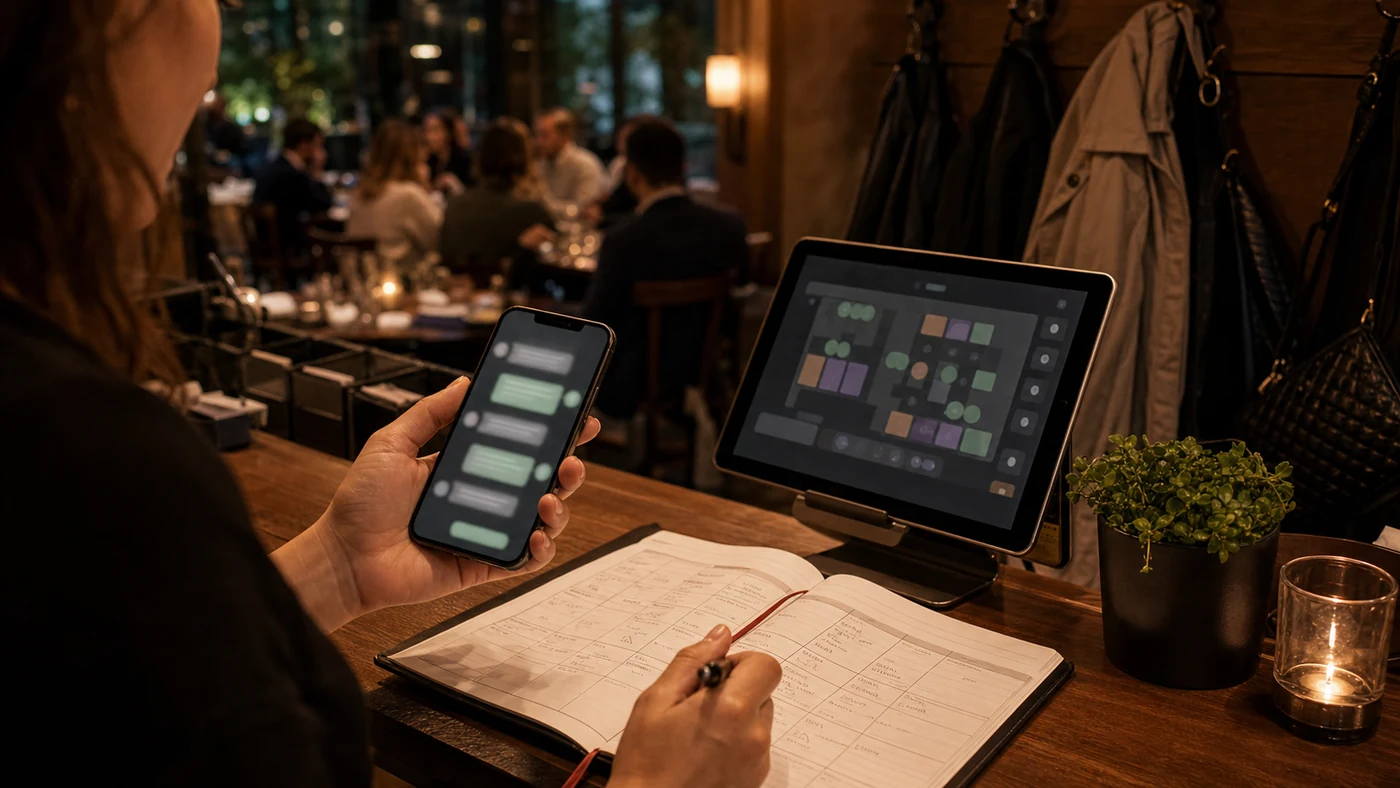
WhatsApp ist da, wo deine Gäste ohnehin schon sind. Sie buchen, fragen nach Allergenen, wollen heute Abend einen Tisch und schreiben um 23 Uhr "Habt ihr offen?". Die Frage ist nicht, ob du es nutzen sollst — sondern ob Messaging eine isolierte Pflichtaufgabe ist oder ein vernetzter Kanal, der deine Gäste leise zurückbringt.
Das Problem ist selten die Nachricht selbst
Restaurants, die Messaging für sich allein ausprobieren, laufen gegen dieselbe Wand: Jemand muss jeden Chat lesen, sich an jeden Stammgast erinnern und ewig dieselben fünf Fragen beantworten. Eine Woche lang klappt es, dann wird der Service hektisch und das Postfach verstummt.
Messaging zahlt sich erst aus, wenn es mit dem Rest deines Betriebs verdrahtet ist — mit deinen Reservierungen, deinen Angeboten und deiner Gästeliste.
Was ein vernetzter Messaging-Kanal leistet
Wenn WhatsApp und SMS Teil eines Systems sind, beantwortet sich die Routine von selbst:
- Häufige Fragen — Öffnungszeiten, Standort, Speisekarte, Parken — werden sofort beantwortet, Tag und Nacht.
- Eine Buchungsanfrage wird zur echten Reservierung, ganz ohne Telefonat.
- Ruhige Abende lösen ein kurzes, freundliches Angebot an Gäste aus, die zugestimmt haben.
- Ein Gast, der gerade bei dir gegessen hat, bekommt einen sanften Anstoß, eine Bewertung zu hinterlassen.
Immer zuerst die Erlaubnis
Gutes Messaging ist eingeladen, nicht aufdringlich. Gäste entscheiden selbst, dass sie von dir hören wollen — am Tisch, auf der Buchungsseite, über einen QR-Code — und können sich mit einem Tipp wieder abmelden. Genau dieses Vertrauen hält deine Öffnungsraten hoch und deinen Namen aus dem Spam-Ordner fern.
Das Ergebnis: weniger verpasste Gäste
Der Gewinn ist nicht "mehr Nachrichten". Es sind weniger Gäste, die kommen wollten und keine rechtzeitige Antwort bekamen. Wenn Messaging vernetzt ist, wird jede Frage zur Chance, einen Platz zu füllen, statt zu einer Aufgabe auf deiner Liste.